SAVE with our $120 New Patient Special
Most adults don’t avoid orthodontics because they “don’t care.” They avoid it because they don’t want the look, the hassle, the cost, or the awkwardness at work and in photos. But here’s the catch: the longer you wait, the longer you live with the same frustration every day. You keep covering your mouth when you laugh. You keep dodging certain angles in pictures. You keep putting off an upgrade you’d actually feel.
If you’re comparing Invisalign vs braces for adults, you’re already doing the right thing. You’re looking for the option that fits your life, not the option that makes your life harder. And if you’re in Poway, we’ll help you choose the path that gets you the outcome you want: a straighter smile that feels natural, looks great, and supports long-term oral health.
We see patients in Poway and nearby communities, including Rancho Bernardo, Rancho Peñasquitos, 4S Ranch, Carmel Valley, Mira Mesa, and Escondido.
Adult orthodontics isn’t what it was when you were a teenager. Treatment is more discreet. It’s more comfortable. And it’s designed around real adult priorities: meetings, travel, dating, family photos, and not wanting to feel self-conscious every time you smile.
A big shift is that orthodontics is no longer only about “straight teeth.” It’s also about function and long-term health. When teeth are crowded or the bite is off, brushing and flossing can get harder. That can increase your risk for decay and gum problems over time. So yes, this is about confidence, but it’s also about protecting your smile.
If you’re also thinking about a brighter or more refined look once alignment is improved, you may enjoy exploring our approach to cosmetic dentistry as part of your bigger smile plan.
At the simplest level, it comes down to fixed vs removable.
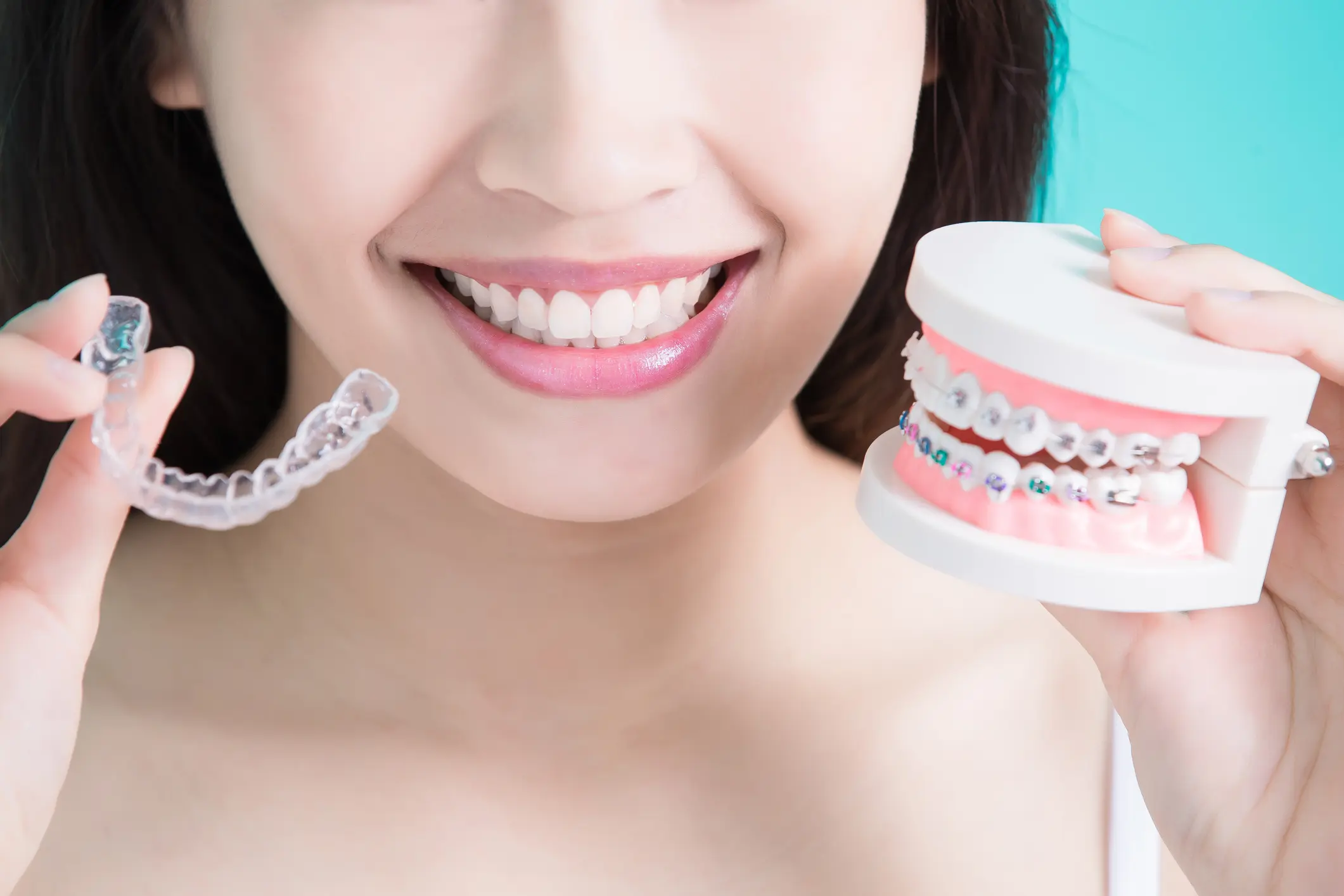
Invisalign uses a series of custom clear aligners that fit snugly over your teeth and gradually guide them into alignment. Because they’re clear and removable, Invisalign is a popular choice for adults who want a low-visibility choice that fits into everyday life. You can learn more about our Invisalign treatment and what to expect.
Traditional braces use brackets and wires attached to the teeth. You can’t take them out. They can be extremely effective, especially when very precise tooth movement is needed. For some adults, braces also feel simpler because compliance isn’t a factor. They’re working 24/7, whether you’re thinking about it or not.
Here’s the practical day-to-day difference most adults care about:
With Invisalign, you remove aligners to eat and to brush and floss. With braces, you eat with them on and you clean around brackets and wires. Neither is “better” in general. The right option is the one that matches your goals and your lifestyle.
If you want a straightforward overview from a trusted source, the ADA’s patient info on orthodontics and braces are a solid starting point.
This is usually the real question. Not “which is nicer,” but braces or Invisalign for adults: which one works better?
Both can be highly effective. Both can treat common issues like crowding, spacing, and many bite concerns. The difference is control and consistency.
Braces can offer more control for certain complex movements because they’re fixed and can apply force in very specific ways. For severe rotations, significant bite correction, or cases that require highly detailed movement, braces may be the better tool.
Invisalign has also advanced a lot. Many adults are surprised by what clear aligners can handle now, including bite issues like overbites in many cases. If you’re wondering whether you’re a fit, this overview on whether you’re a good candidate for Invisalign can help you think through the basics.
The deal-breaker for aligners is simple: you have to wear them. Clear aligners are removable, which is a benefit, but it also means results depend on consistency. That’s why Invisalign can be a great fit for motivated adults, and a frustrating fit for people who know they won’t keep them in.
If you want the short version:
This is where most adults decide.
One of the biggest Invisalign benefits for adults is comfort. The aligners are smooth and custom-fit, so there’s no wire poking and fewer sharp edges irritating cheeks and lips.
Braces can still be totally manageable, but they tend to come with more “hardware” friction. You may feel irritation after adjustments, and you’ll want to be mindful of anything hard or sticky that can damage brackets.
For a lot of adults, the biggest factor is how they’ll feel during treatment, not after it. Invisalign is popular because it’s discreet. People often won’t notice you’re wearing aligners unless you point it out. That matters if you’re in a client-facing role, leading meetings, or you just don’t want your orthodontic care to be the first thing someone sees.
With Invisalign, you remove aligners to eat. That means no food restrictions, but it does mean you need a routine. You take them out, eat, brush, and put them back in.
With braces, you eat with them on, but you avoid certain foods. It can be simpler in the moment, but it’s less flexible.
Many adults choose Invisalign because it makes brushing and flossing easier during treatment. You remove aligners and clean like you normally would. With braces, you’ll need more time and attention to clean around brackets. That matters if you’ve ever struggled with inflammation, want to protect your enamel, or you simply want treatment to feel clean and manageable.
Treatment time varies by case. Some adults finish faster with aligners, some with braces, and many take a similar amount of time either way. The biggest variables are complexity and consistency.
For Invisalign, you’ll typically wear aligners most of the day and switch trays on a schedule. If you want a clear, practical breakdown of the wear-time expectation, this guide on how often to wear Invisalign aligners spells it out.
Cost depends on complexity, treatment length, and the approach we recommend. The biggest mistake adults make is assuming they already know the price, so they never get evaluated.
If you want to understand how benefits may apply before you come in, our insurance information is a useful starting point.
If you’re in Poway looking for Invisalign for adults, you’re probably searching for a modern option that feels like it was built for adult life. That’s exactly how we approach it.
Here’s how we help you decide, in plain terms:
If it’s been a while since you’ve liked your own smile in photos, the “right” choice is the one you’ll actually stick with.
If you’d like a simple way to get started, our new patient special can make that first step easier.
Straightening your teeth as an adult is an investment in confidence and long-term oral health. The best option depends on your goals, your lifestyle, and what your teeth need.
Schedule your Invisalign consultation in Poway so we can evaluate your smile and tell you, clearly, whether Invisalign or braces is the better fit for you. You can reach us through our contact form or by phone.
1) Is Invisalign faster than braces for adults?
Sometimes, but not always. Treatment time depends on complexity and consistency. Some mild cases can move efficiently with Invisalign, while more complex cases may take a similar amount of time with braces.
2) Are braces cheaper than Invisalign?
Not necessarily. Cost depends on case complexity and treatment length. During your consultation, we’ll review options and help you understand how benefits may apply, including details found on our insurance information page.
3) Can Invisalign fix overbites in adults?
Yes, many overbites can be improved with clear aligners. The key is a proper evaluation to confirm what movements are needed and what approach will be most predictable. If you’re unsure whether you qualify, you can learn more in our article about being a good candidate for Invisalign.
4) Are clear aligners noticeable?
Most adults find clear aligners very discreet. They’re designed to blend in, which is why they’re popular for professional and social settings.
5) Do braces work better for severe crowding?
In certain complex cases, yes. Braces can offer more direct control for difficult movements. We’ll tell you upfront if braces alone will give you a better outcome or if a combination with cosmetic dentistry may help you achieve your ideal smile.
6) How often do I need to wear Invisalign?
Most adults need near-full-time wear for results to stay on schedule. That typically means wearing aligners most of the day and only removing them for eating and cleaning. You can read more about daily expectations in our post on how often to wear Invisalign aligners.
7) Is Invisalign painful?
Most patients describe it as pressure rather than pain, especially when switching to a new tray. Discomfort is usually mild and temporary.
8) Can adults get braces at any age?
Yes. Adult braces are common, and adults of many ages can benefit from orthodontic treatment if gums and teeth are healthy enough to support movement. If you’re exploring options, you can schedule an evaluation through our contact page.
9) Will insurance cover adult orthodontics?
Some plans offer partial orthodontic coverage, and some don’t. We’ll help you understand your benefits and discuss practical payment options during your visit.
10) How do I know which option is right for me?
A personalized consultation is the fastest way to decide. We’ll evaluate your alignment, bite, and goals, then recommend the option that fits your case and your lifestyle. New patients can also take advantage of our new patient special to get started.
Mon by appointment only
Tue 8:00AM - 5:00PM
Wed 8:00AM - 5:00PM
Fri 8:00AM - 5:00PM
12307 Poway Rd. Suite B
Poway, Ca 92064


Mon by appointment only
Tue 8:00AM - 5:00PM
Wed 8:00AM - 5:00PM
Fri 8:00AM - 5:00PM
12307 Poway Rd. Suite B
Poway, Ca 92064
© Smiles by Dr.Leila 2023 | Designed and Powered by Explore Digital | Privacy Policy